Coastal areas are vital ecosystems. They support diverse marine life and provide essential resources for human communities, but they face increasing threats from pollution and human activity, which makes monitoring water quality, and pH in particular, crucial. In this case study, ANB’s calibration-free, solid-state pH sensor was deployed from a research vessel off Oban on the west coast of Scotland and compared with a glass-based oceanographic pH sensor deployed alongside it.
- Where
- Coastal waters off Oban, on the west coast of Scotland
- Set-up
- Sensor at 2 m depth from a stationary research vessel, powered by a surface-mounted battery
- Duration
- 26 hours, with a measurement every 15 minutes
- Compared with
- A glass-based oceanographic pH sensor deployed alongside
- Result
- pH rose and fell with the tide between 7.7 and 7.9; the glass probe gave scattered, unreliable readings
Why monitor pH in coastal waters?
Changes in pH can indicate the presence of pollutants such as agricultural run-off, industrial discharges and sewage, which can significantly alter water chemistry and harm aquatic life. By tracking pH in coastal waters, scientists can quickly identify pollution sources and assess the overall health of the marine environment. That information is vital for protecting sensitive species that are particularly vulnerable to changes in acidity.
Coastal water is also a demanding place to measure. pH changes naturally with the ebb and flow of the tide, so a sensor has to give consistent readings over a full tidal cycle before anyone can pick out the changes that matter. For the background on pH and why it matters in water, see what is pH?
Side by side with a glass probe
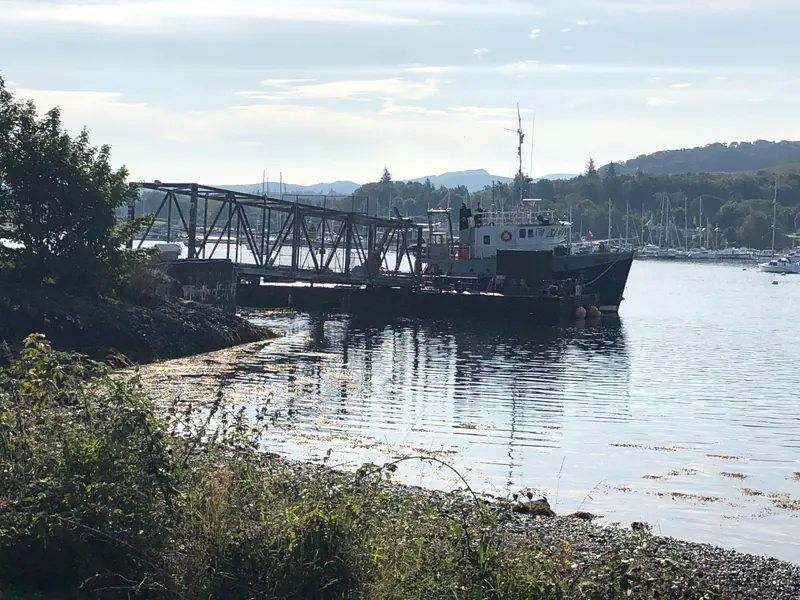
The ANB sensor was deployed from a stationary research vessel along the west coast of Scotland, positioned at a depth of 2 metres and connected to a surface-mounted battery. A glass-based oceanographic pH sensor was deployed alongside it, so the two could be compared in the same water.
- Depth: 2 m
- Power: surface-mounted battery
- Measurement interval: every 15 minutes
- Duration: 26 hours
Tidal pH between 7.7 and 7.9
After 26 hours of operation, with measurements taken every 15 minutes, the ANB data showed bi-daily (twice-daily) pH fluctuations between 7.7 and 7.9, reflecting the natural ebb and flow of the tidal waterways.
The glass electrode probe did not yield reliable data. It performed poorly under the same conditions, and its readings were scattered.
| ANB calibration-free sensor | Glass-based oceanographic sensor | |
|---|---|---|
| Data over 26 hours | Consistent readings every 15 minutes | Scattered readings; not reliable |
| What it showed | Tidal pH fluctuations between 7.7 and 7.9 | Performed poorly under these conditions |
What the sensor showed
The deployment shows ANB’s sensor giving reliable, continuous pH data in coastal water where a glass probe struggled. Timely data on the twice-daily pH variations lets researchers follow the effect of tidal flows. With a consistent baseline like this, changes associated with an influx of pollutants stand out, so authorities can respond quickly to protect marine life and keep coastal waters safe for recreational and commercial use.
The sensor is fully solid-state: there is no glass membrane and no liquid reference to look after, and it calibrates itself in situ, so there are no buffers to run before or after a deployment. For a side-by-side look at the two technologies, see glass vs solid-state pH sensors. Today’s AQ² sensor has an accuracy of ±0.2 pH and a resolution of 0.01 pH.
As coastal monitoring becomes more important in the face of environmental challenges, continuous pH data helps researchers and authorities make informed decisions that protect and preserve coastal ecosystems. More coastal and marine uses are on our applications page.